Signed in as:
filler@godaddy.com
Most plot points involve some form of a twist.
A reveal.
A complication.
A shift in direction.
But around Plot Point #9, something bigger tends to happen.
This moment usually lands around page 45 of the screenplay.
About 45 minutes into the movie.
Not always… but often enough to recognize the pattern.
This isn’t just another beat.
This is a major turn.
The kind of twist that:
It doesn’t just move the story forward…It redirects it.
Up to this point, the story has been building momentum from the First Act Break.
The hero is on the journey. The goal is clear. The direction is set. Then Plot Point #9 hits…and suddenly: The road changes.
This twist often puts pressure on the protagonist in a new way
.
The hero doesn’t get to cruise anymore. Now they have to adapt.
This is where the audience leans forward.
Because just when they think they understand the movie, the rules change.
This is not a random surprise.
It must be:
A twist without setup feels cheap.
A twist with the setup feels inevitable.
A twist maintains energy, tension, and unpredictability. It reminds the audience: the journey won’t be easy. This story won’t be simple.
Plot Point #9 is where your screenplay proves it has teeth.
It’s not just moving forward…It’s evolving.
EXAMPLE:
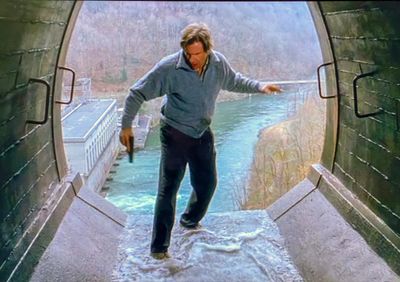
THE FUGITIVE: Dr. Richard Kimble is almost captured. With nowhere to run, it seems he will have to surrender. But then he....jumps off a huge dam. No one saw that coming. A twist that takes him further on the run.